
Directed by Beatriz Caravaggio
Colour and b&w | 29 min. | 2016
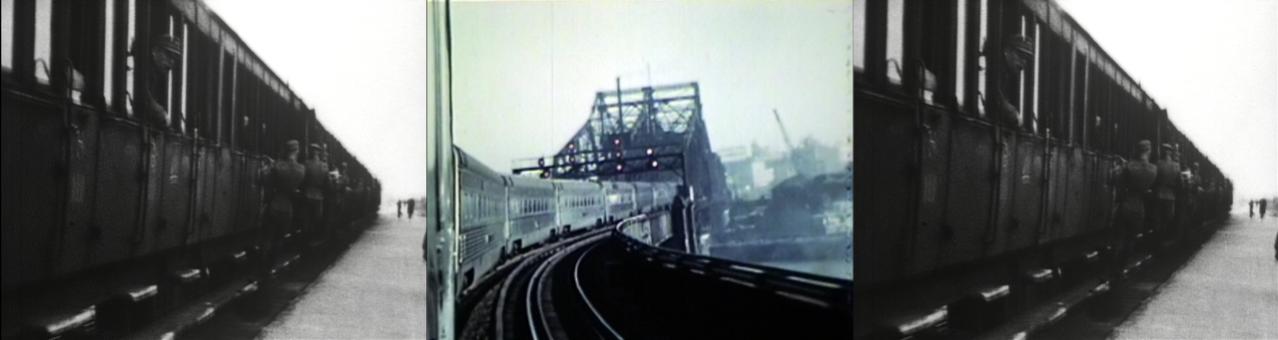
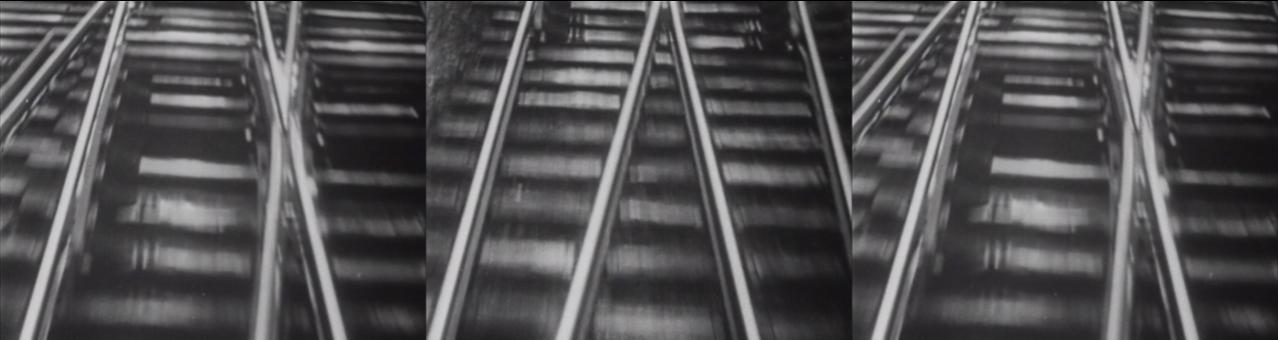
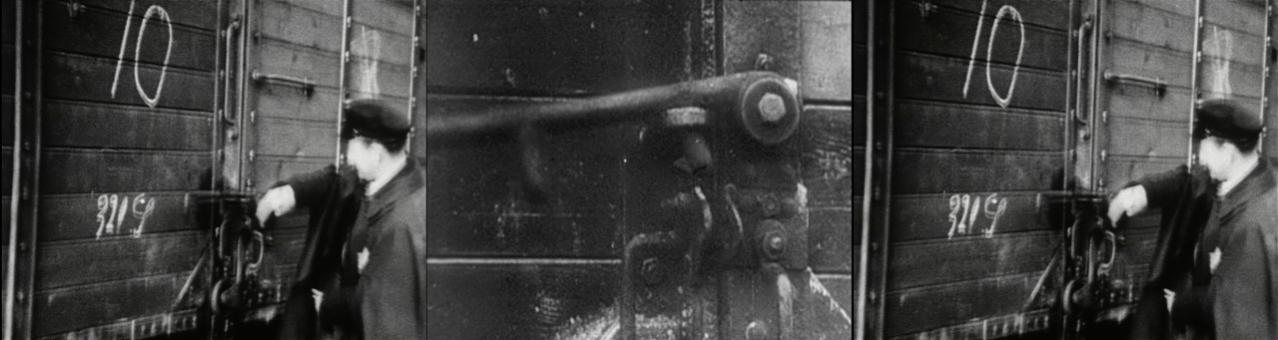
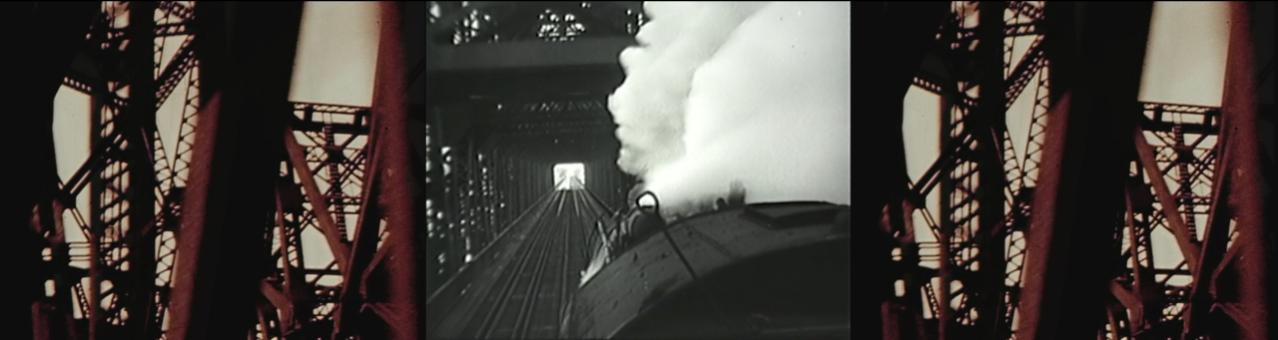
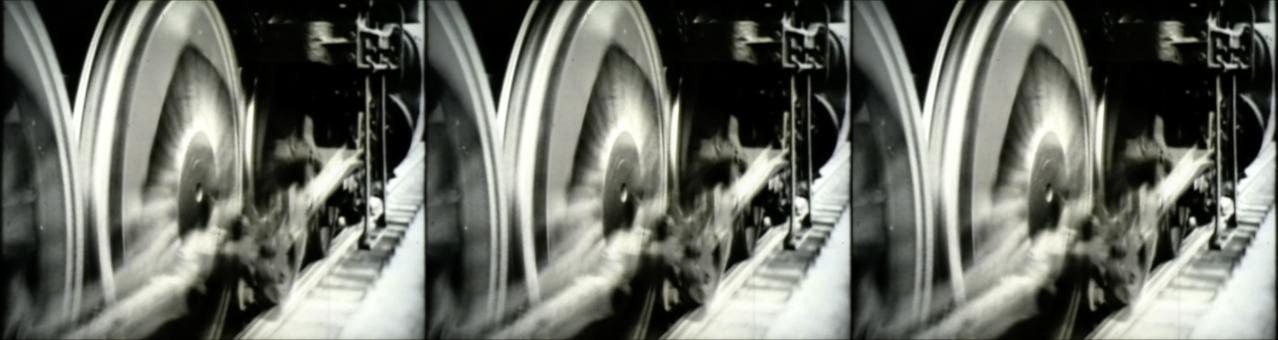
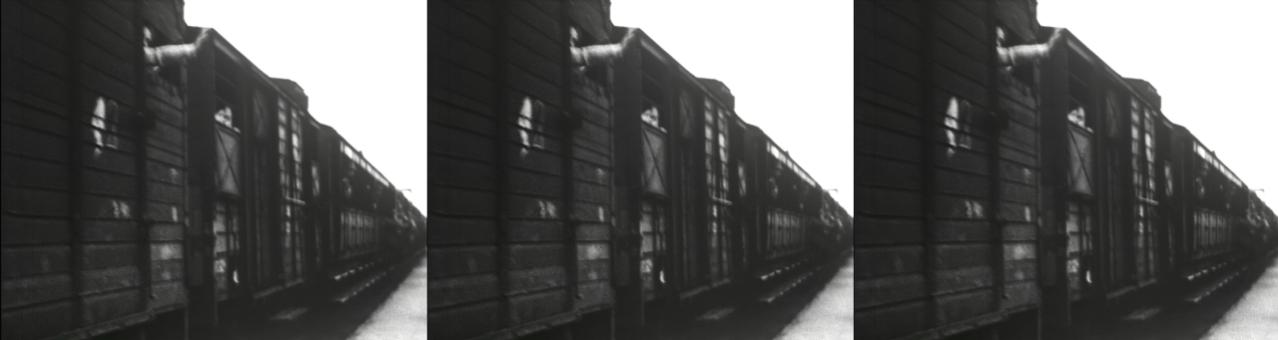
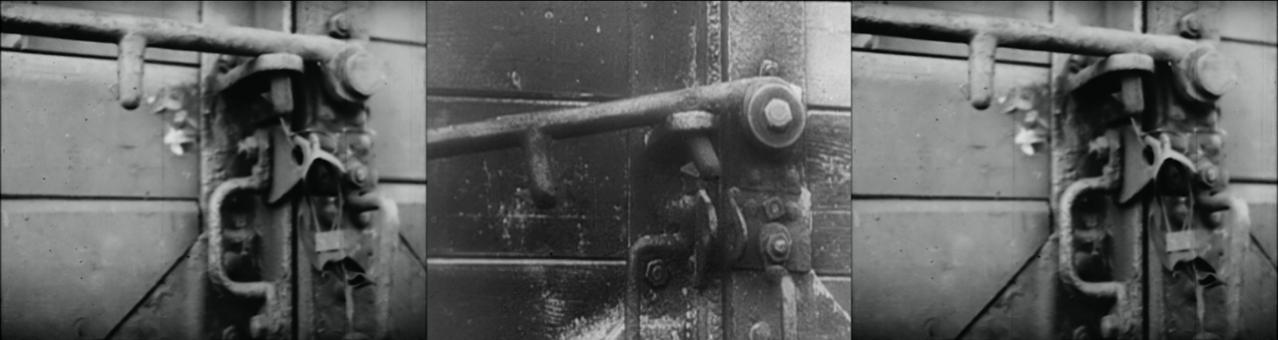
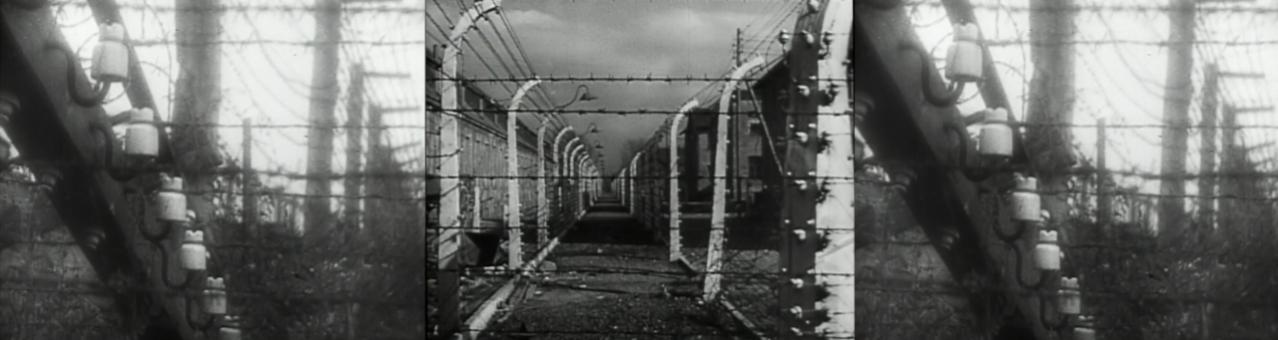
Different Trains brings visual life to the eponymous score composed by Steve Reich in 1988: a three-movement work for string quartet and pre-recorded tape, that reflects the composer’s personal experiences during World War II and confronts them with the horrors of the Holocaust. Created entirely from archival film material, the film uses the train as a symbol of radically different destinies depending on geographical and historical context. Thus, majestic trains travel through the idyllic landscapes of the United States, while in Europe, deportation trains transport Jews to Nazi extermination camps. The film concludes, after liberation, with the survivors’ journey to America. The musical recording synchronised to the film is the canonical version, performed by the Kronos Quartet in 1989.
With the support of the BBVA Foundation
Music by Steve Reich
THE CINEMATOGRAPHIC REWRITING OF DIFFERENT TRAINS
Miquel Martí Freixas
Revisiting, rethinking, looking back upon past events are artistic attitudes of our time. A very active cultural stance in the latest decades, which explores especially the legacies of the twentieth century. This revisitation of the past offers a detailed reflection of the times lived, inscriptions in memory that are still more profound than those that already existed. We might understand this return voyage as a posthumous chapter of the preceding century.
The twentieth century is also the first in which humanity possesses a variety of tools so as to leave extensive records and interpretations of the experiences lived. It is a century that has been printed, photographed, set to a soundtrack, filmed day by day. In the twenty-first century, these multiple tools that record the developments have become globalized and supersaturate their own function. It is a time that is written down, photographed, set to a soundtrack, filmed, shared and experienced virtually every minute in a diversity of formats and platforms. The enormous and rapidly growing amount of material that records the testimony of our time obstructs a calm and distant gaze. Perhaps these obstacles to the comprehension of the twenty-first century also encourage the search for reasons on the trails of the twentieth century. One of the characteristics of these times of multiple registries is their intersection. They are mixed, interactive, participatory expressions. A distinctive feature that is also adopted in contemporary art. An example of this are the reinterpretations in many artistic environments: palimpsestic forms and creations that are hybrids of various disciplines the limits of which are blurred, or polyhedral approaches that allow to delve deeper into the object of study.
The work of Beatriz Caravaggio is created in this post-cultural framework. At the start of the twenty-first century, she looks back onto the key years of the twentieth, those of the Holocaust. The work, a film, is a reconstruction of memories composed in musical form in the nineteen-eighties—Steve Reich’s biographical compositions that reflect upon the collective experiences of those who suffered the barbarity of Nazism during the thirties and the forties. Thus, in our present, we are offered a singular and complex diaristic-musical-cinematographic work that spans some eight decades.
Rhythms, fragments and compositions of memory
Steve Reich’s work Different Trains is the description of a thought. In his childhood, the composer travelled the United States coast to coast to visit his separated parents. A child in large trains, journeys that lasted several days, long hauls lived as adventures. In his mature years, and in the process of inquiring into his Jewish roots, the composer understands that while he enjoyed these spectacular journeys, with the deported Jews destined for confinement or death, desperate stories circulated on other railways. The composer becomes conscious of his fortune, perhaps of the importance of destiny, as a Jew in a country far from the Europe of Nazism and the Holocaust.
Repetition is an outstanding feature of Reich’s musical composition, in which elements that recall the activity of a train have a great presence. The piece is composed of moments that combine quickness and slowing down, expressing different speeds. Whistles characteristic of the operation of a railway are easily distinguishable. And very particularly, the work reflects the unmistakable, ceaseless rattle that ends up becoming an internal rhythm for the traveller. The American composer renders this with an enveloping reiteration of sound, as though in a state of an auditive trance, that might open the mind to a dream-like state. It is in this more intangible sphere where the connection with other, distant physical spaces occurs, with other trains and other human beings. This rhythmic mental voyage shall be the basis of their memory.
Beatriz Caravaggio interprets Steve Reich’s ideas giving the piece a visual life. Her reading builds on a montage of archive images related to the subject matter and belonging to the same period; that is to say, images that have a documentary connection with the described history.
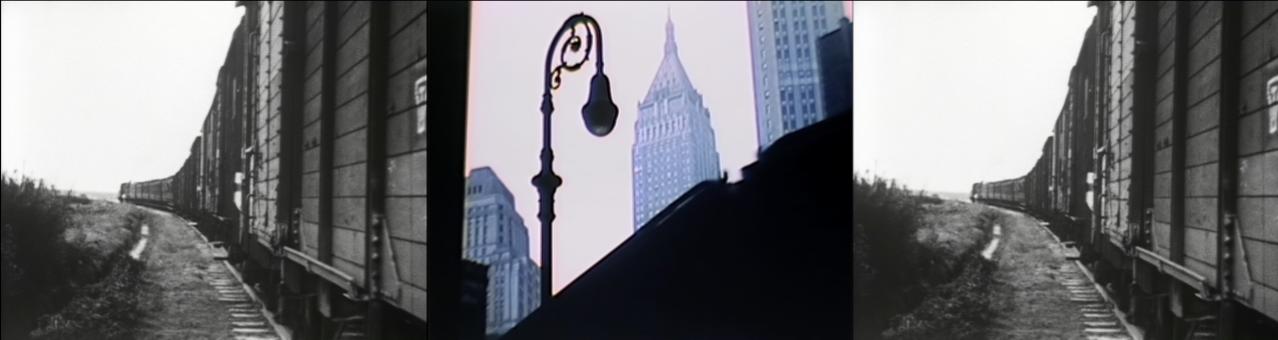
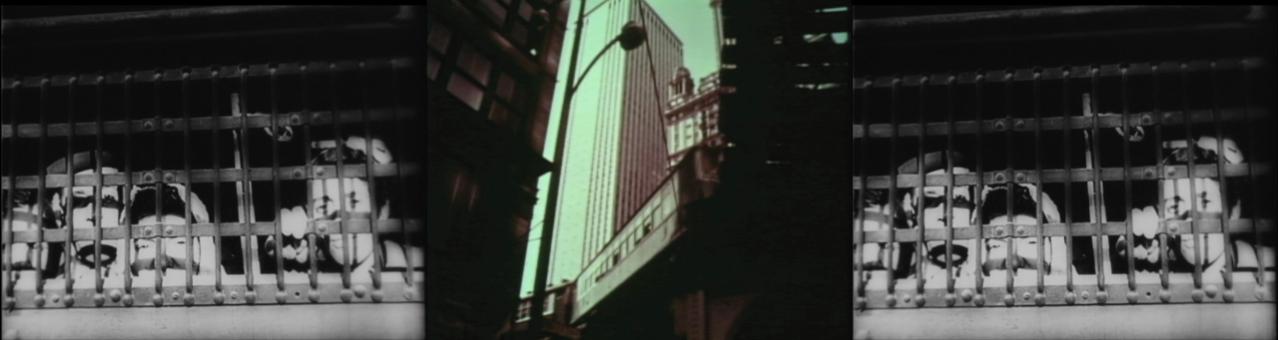
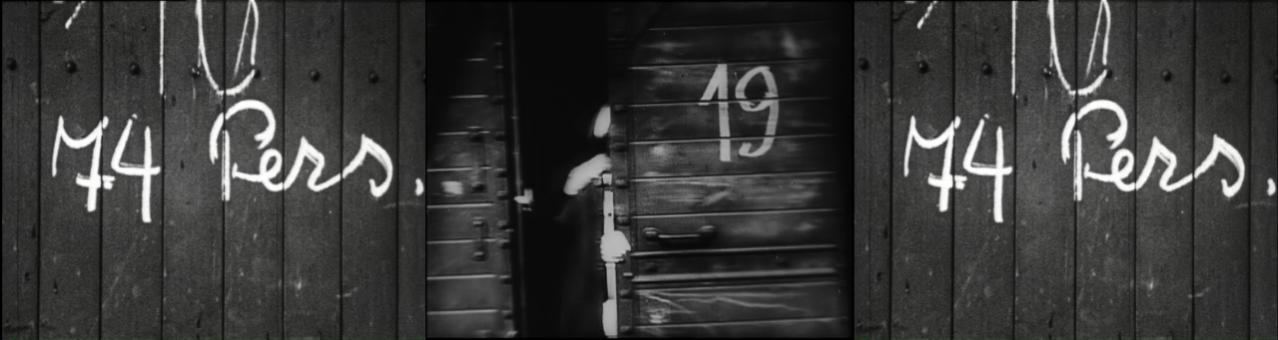
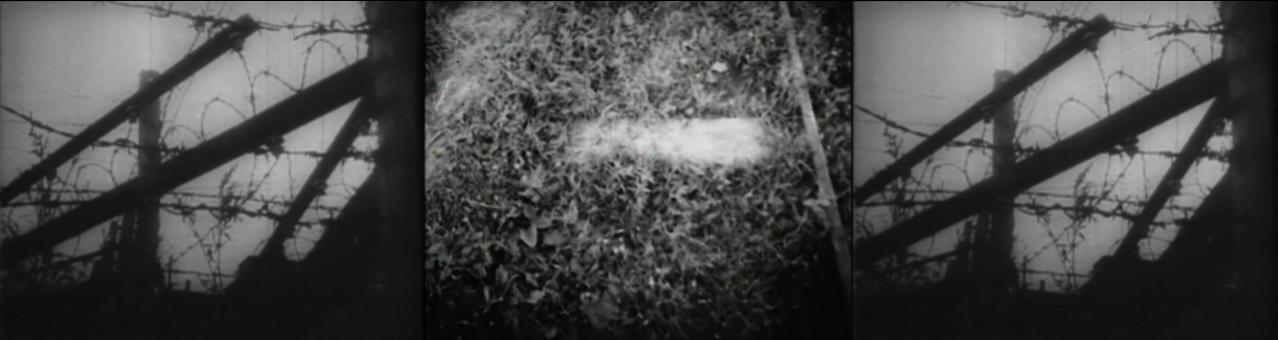
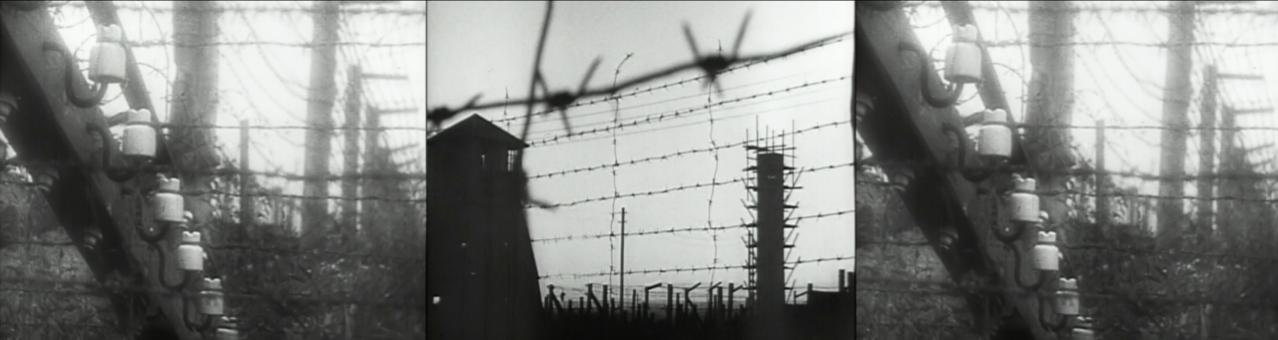
The film moves from a bucolic setting of nature and landscapes, with an admiration for the new trains, to return to large cities and significant buildings, a grey urban world after World War II, having travelled through more obscure periods of the conflict. Throughout this passage of time, she brings together archive images belonging to concentration camps, deportation, extermination and liberation. Film records rescued from places and circumstances with few witnesses of the reality, the rescued images – the fruit of historical events, in some cases of heroic acts. In the extensive effort of the selection of archive material, the video-artist’s creative work lies in an excellent reordering of all these images, a methodical and precise elaboration made frame by frame. As a result of this process, the construction of a narrating gaze, the documentary origin is rewritten to create a storyline.
An important feature of the montage is the division of the screen in three parts, offering a range of readings. On the one hand, the triptych is slightly arrhythmical, which offers us a fragmentation of time, fractionated memories. Reminiscences that appear somewhat scrambled, shaped with a diversity of dynamics, movements and voices. The triptych is also an aesthetic composition of movements, forms and colours, constructed with an evocative richness owing to the coordination, the similarities or contrast. It is a collagistic work, but at the same time, the variety of archive sources is presented with a visual uniformity, which offers us a cohesive story.
Beatriz Caravaggio also maintains the original structure that divides the work into three movements, and it is in the third that the triptych acquires a new value through the contrast of meanings. The survivors arrive to their new destinations and the quotidian rhythm of these cities saturates their lives, but these cannot but continue to bear the indelible marks of the Holocaust. Thus, the course of the present time will coexist with memories of the past.
Significance and legacies
The artistic representations related to this subject have been many, beginning in the very concentration camps (painting, drawing, music, literature, poetry, among other expressions) and until today. There are quite a few masterpieces that have become cultural milestones, but speaking of the works as a whole rather than highlighting talents and successful renderings, the conglomerate formed by those that are the most ethical, more rigorous, profound or representative constructs a collective memory of the events.
In different disciplines, an influential legacy is shaped by written memoirs, literature and poetry (Paul Celan, Anne Frank, Imre Kertész, Eugene Kogon, Primo Levi, Elie Wiesel, among many others), by film-makers (Alain Resnais, Claude Lanzmann, Andrzej Munk, Harun Farocki, László Nemes) and music, as in the case of Steve Reich’s work and Beatriz Caravaggio’s cinematographic recomposition. Memorials and museums of the entire world perform the function moulding historic memory, including artistic memory. We might also include works that reach a very mainstream audience and, although less profound than those mentioned earlier, maintain an ethic and a true interest in the subject matter and, in their popularity, influence a large stratum of the population. This could be the case of Steven Spielberg’s famous film (and let us not forget his essential work with archive material) or comic books, such as the pioneering work of Bernard Krigstein or Art Spiegelman’s famous graphic novel.
All together, they forge a rich and multiple legacy of inscriptions in memory. A monolith of representations that inscribe the important concept of never forgetting what happened. In addition, we also find a hope of a future heritage, a hope that the history lived in the twentieth century, the Holocaust and all its causes and consequences will be part of the memory of the future. As though a common knowledge that impedes their repetition might be shared by human beings, instilling the extreme lessons and experiences of that time in their cognitive learning.